


About Biodiversity Net Gain
The Biodiversity Net Gain process provides a way of measuring and accounting for biodiversity losses and gains resulting from development or land management change.
Biodiversity Net Gain has become an integral part of the planning process. The new Environment Act will require all new development proposals that require planning permission to demonstrate a 10% net gain.
The net gain calculation is completed through the use of a metric calculates the existing ecological value of habitats on site compared to what is being lost / proposed. If it is not possible to achieve a net gain of 10% on site, then off-site habitat creation or financial compensation to designated Biodiversity Gains Sites will be required.
Our Biodiversity Net Gain Services
We have been undertaking Biodiversity Net Gain assessments since its inception and have extensive experience throughout the UK. We have experience working with various local councils and can assist you through your planning application.
We can undertake metric calculations on a widespread of habitats including rivers (river MoRPh certified surveyors). With our vast experience we can provide you with the technical advice and recommendations needed to ensure that your application meets Biodiversity Net Gain legislative requirements. We also provide technical support with establishing habitat banks (registered on the Natural England ‘Biodiversity Gains Register’).


Gleeson Homes
Biodiversity Net Gain assessments for two housing developments; one based in Carlisle, Cumbria and one based in Earby, Lancashire.
Old Links Golf Club, Bolton
Surveys of existing habitats and assessment of unit value were undertaken in relation to proposals for a new club house and facilities. Considerable opportunities for Biodiversity Net Gain will be achievable at this golf course located on the edge of the West Pennine Moors.
Vistry Group
Biodiversity Net Gain assessment undertaken as part of a feasibility study for a potential future development. We undertook the assessment to provide a habitat unit value of the existing habitats in order to provide recommendations for future landscaping proposals.
AA Projects
Biodiversity Net Gain assessment of Manchester Enterprise Academy. As the existing habitats had a low habitat unit value, a Biodiversity Net Gain was achieved on-site through an appropriate landscape design which incorporated our recommendations.

Biodiversity Net Gain Case Study – Calico Homes
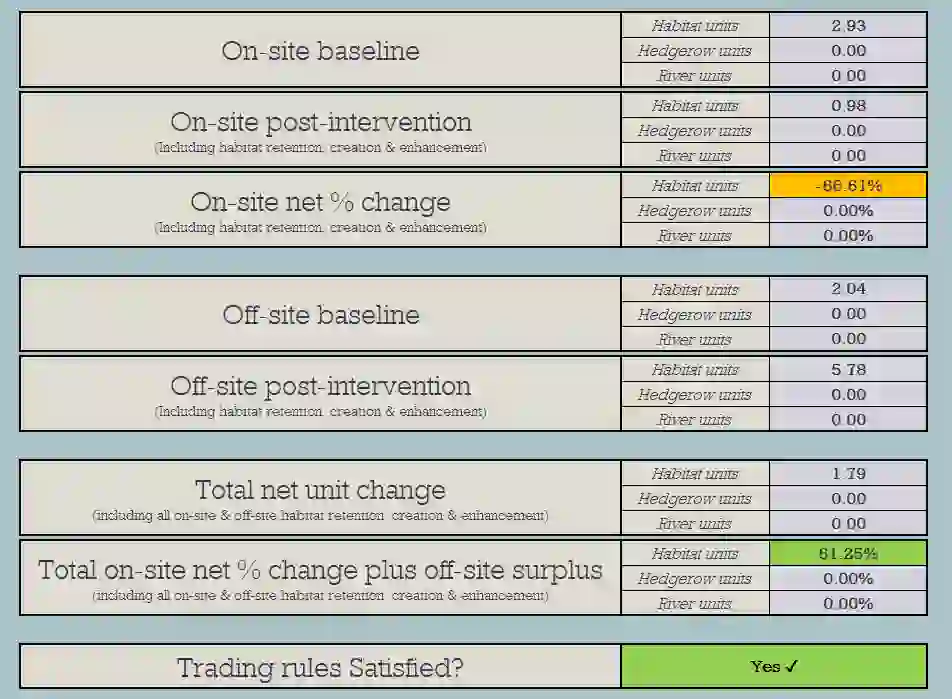
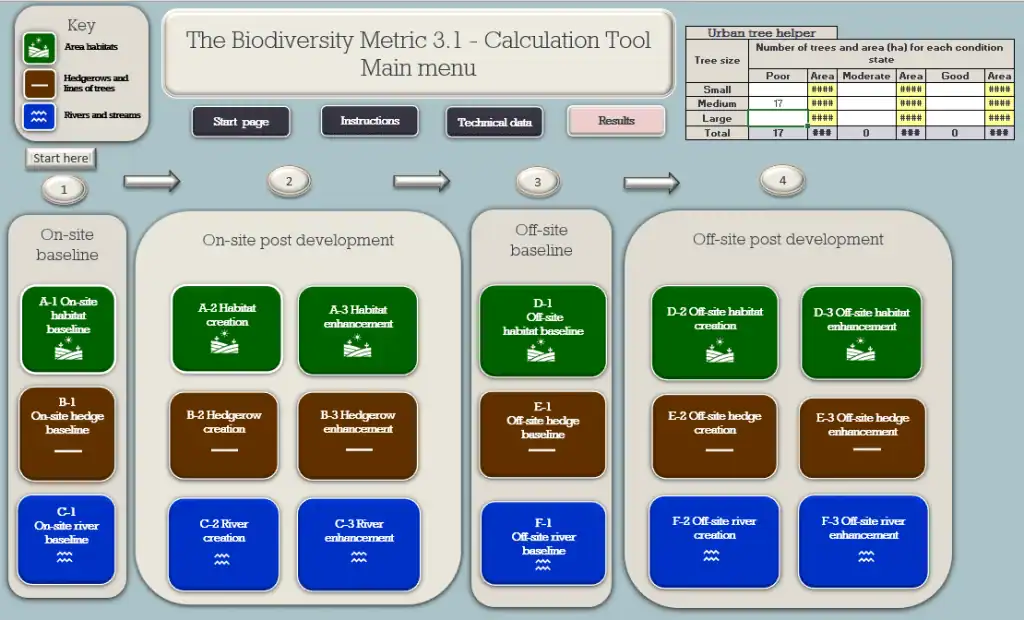
Working on behalf of Calico Homes for a proposed housing development in Burnley, we undertook a biodiversity net gain assessment. A comprehensive assessment was undertaken using the Natural England metric (v3.1) which confirmed that there would be an overall biodiversity net loss on-site.
Subsequently, an area of off-site land adjacent to the development site was identified for habitat creation. A landscape design was created with guidance from the metric which ensured that the on-site and off-site proposals resulted in a 61% net gain overall.
We worked with our client to reach an agreement with Burnley Council that the future maintenance and management of the off-site habitat area will be completed by Burnley Council.
Biodiversity Net Gain Case Study – R&A Championship
Working on behalf of the R&A Championship, we undertook a biodiversity net gain assessment for a new tournament tee for the 2026 Open at Royal Birkdale. The metric calculation accounted for proposals affecting coastal dunes which are classified as irreplaceable habitats.
In dealing with impacts on irreplaceable habitat, a bespoke habitat compensation proposal was designed. The habitat compensation measures would ensure no long-term detrimental effect on the irreplaceable habitats. The proposals brought forward were supported by both the Local Planning Authority and Natural England and planning approval was successfully achieved.
We provided a 30 year Habitat Management and Monitoring Plan which outlined the ongoing management requirements which will ensure the proposed habitat compensation reaches the target condition.


Get in Touch to discuss your project and how we can help
Speak Directly to our Ecological Professionals.
Bolton Office - Bob Leatham
Office - 01204 844 545
Mobile - 07505 172 087
bob@pennineecological.co.uk
Chorley Office - Pat Leatham
Mobile - 07545 385 898
patrick@pennineecological.co.uk
Preston Office - Ian Ryding
Office - 01772 600441
Mobile - 07707 039 254
ian@pennineecological.co.uk
Glossop Office - Stuart Macpherson
Mobile - 07883 438 666
stuart@pennineecological.co.uk
Bolton Office - Luke Pilling
Mobile - 07301 034 716
luke@pennineecological.co.uk